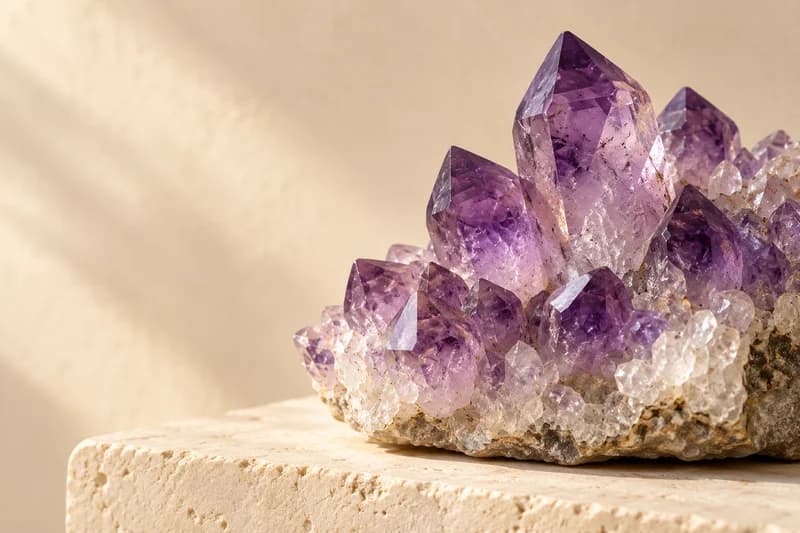
Amethyst is often the first mineral that makes someone stop and look. Its purple points are instantly recognizable in photographs, yet a purple stone is not automatically amethyst. Understanding its relationship to quartz gives you a more useful starting point than color alone.
Amethyst is purple quartz. Its mineral properties help guide identification, while light, heat and physical knocks deserve attention in storage.
What is amethyst?
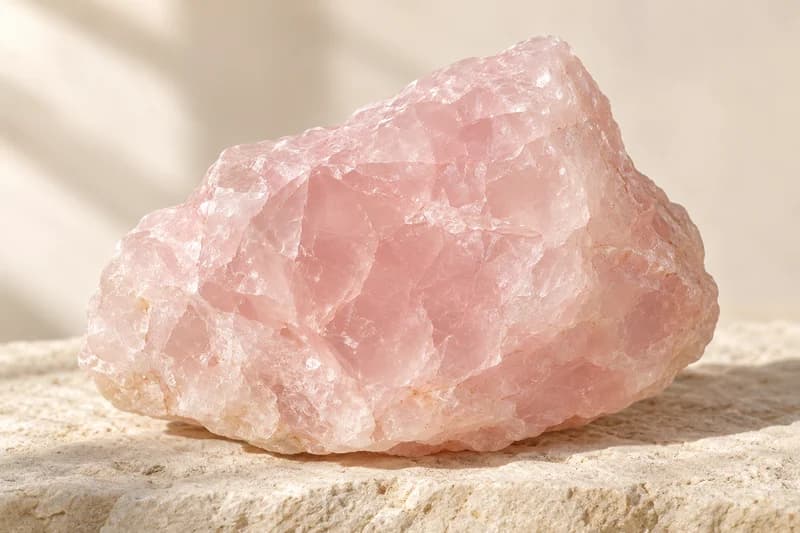
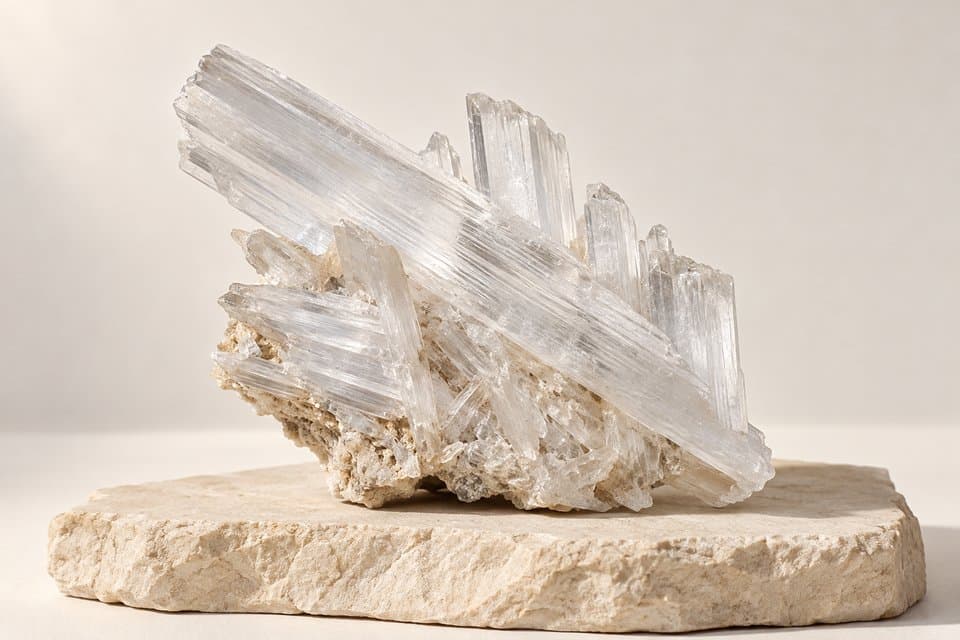
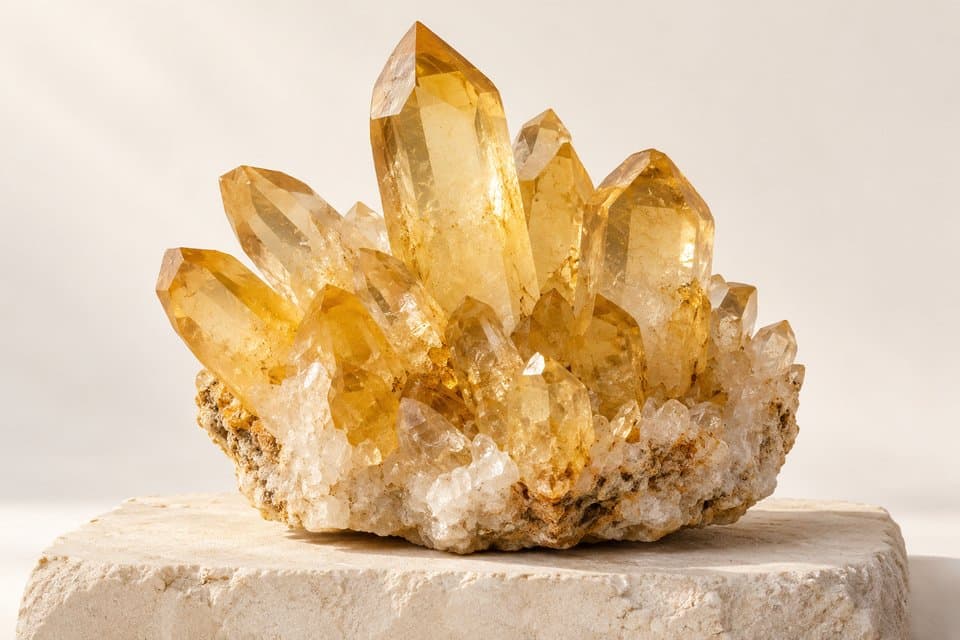
Amethyst is the purple variety of quartz, with the chemical formula SiO₂ and a Mohs hardness of 7. It belongs to the same mineral family as clear quartz and rose quartz. The variety name describes its characteristic appearance; it does not turn it into a separate mineral species.
For your collection, record both levels: “Quartz” as the mineral and “Amethyst” as the variety. That simple distinction helps when comparing related stones or reading labels that alternate between a family name and a trade name.
What can you learn by looking?
Many familiar amethyst specimens show clusters of pointed crystals, with color that varies across a piece. A cluster gives you more external structure to observe than a tumble or a bead. Photograph the whole specimen first, then move closer to the termination of a point and the boundary between the crystals and their base.
Use these observations to form questions, not to prove origin or treatment. A colored glass object, another purple mineral or a treated material may be misleading in a single image. A photo does not establish whether a stone is natural, synthetic or modified.
Choose a display position thoughtfully
GIA advises avoiding prolonged exposure to heat and sunlight to help preserve amethyst’s color. A bright windowsill is therefore a less useful permanent home than a stable shelf away from direct sun. The right position also keeps a heavy cluster away from an edge where someone could knock it over.
Set points on a supportive base rather than balancing the entire specimen on one fragile contact. When you move it, support the base with both hands if its size calls for it. Hardness describes scratching resistance; it does not promise that a pointed crystal cannot chip.
Keep care notes with the identification
Record the care method recommended for your particular piece, especially if it includes other minerals, adhesives or a delicate host rock. Do not assume advice for a solid piece of quartz also suits an entire mixed-mineral cluster.
Add a baseline photo to your collection record. A consistent view taken over time is more helpful for noticing a change than relying on memory. GemLore can keep a discovery and personal notes together, while a receipt or professional report should be retained separately when relevant.
Sources & further reading
These guides combine practical collection advice with the mineral and gemological references below. Identification and value estimates are informational; photographs cannot replace appropriate expert examination.
From a little curiosity to your own collection.
Explore a likely mineral identification, learn its story, and keep your notes together.
Explore GemLore Free to download. AI identification and premium features require a subscription. Fair use limits apply.