Rose quartz brings a softer palette to a mineral collection. Its pink color is a useful description, but it is only the beginning of the identification process. Looking at transparency, surface texture and the way a piece has been finished gives your collection record far more detail.
Describe the pink color carefully, distinguish mineral facts from traditional symbolism, and avoid treating a photograph as an authenticity test.
A pink member of the quartz family
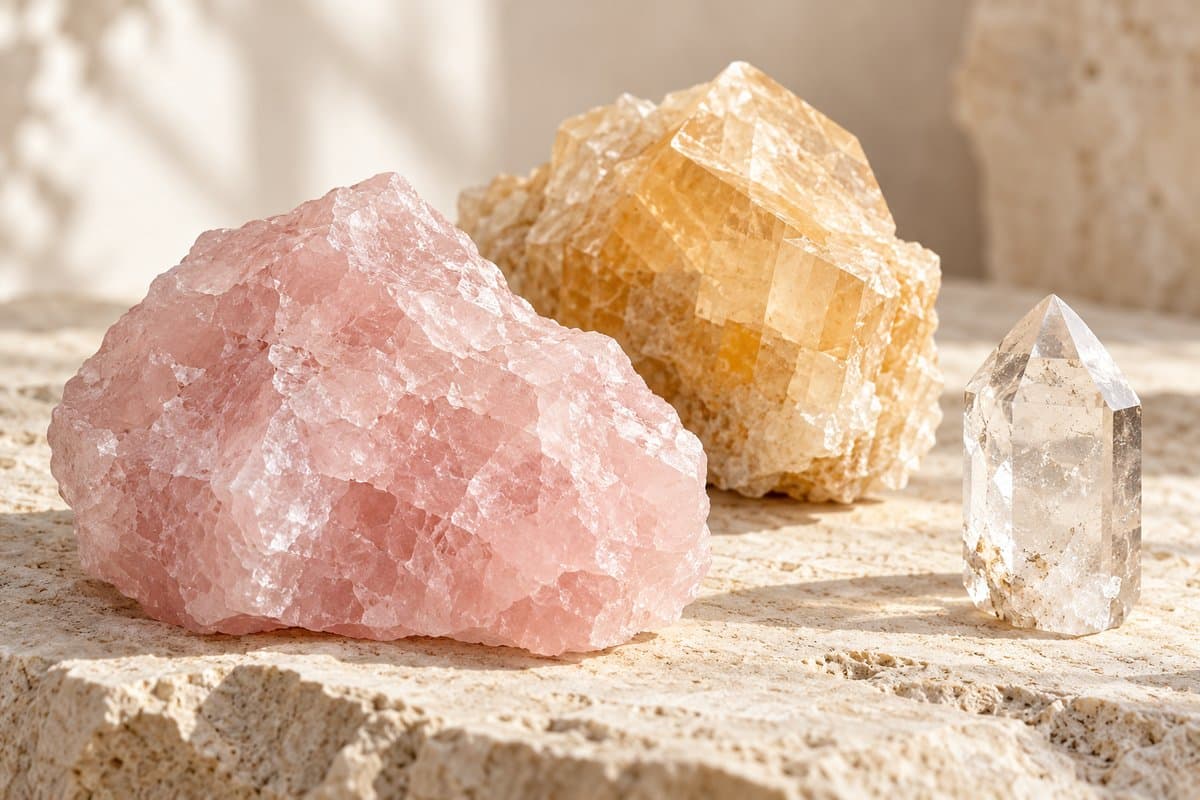
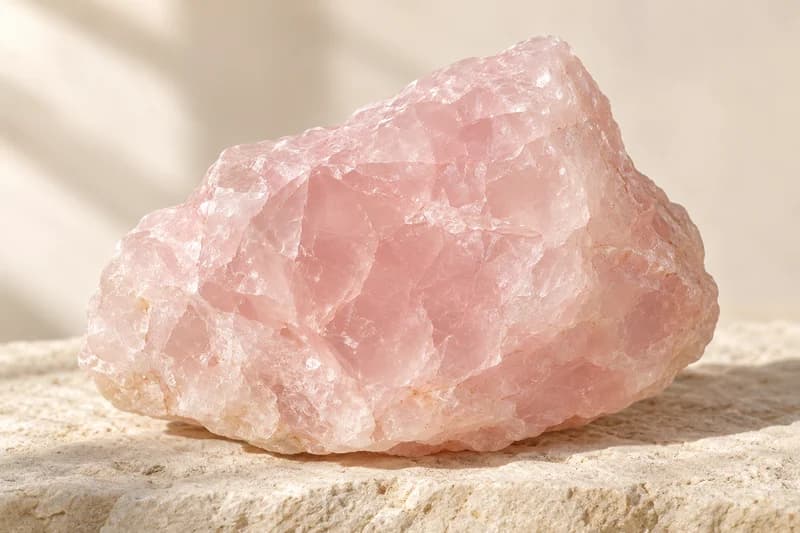
Rose quartz is a variety of quartz. GIA lists its Mohs hardness as 7 and describes a color range from very light pink to medium-dark pink. The name is therefore most useful alongside the mineral name, quartz, rather than as an isolated label.
A pale specimen can look almost white under a bright lamp. Before deciding that a photograph shows the wrong material, compare the stone in neutral light with an evenly exposed image. Avoid judging its color through a tinted display setting or a strong camera filter.
Record what your individual piece looks like
A useful entry might read “pale pink, partly translucent, polished surface, visible white fractures.” Those details describe the specimen in front of you. A generic entry such as “pink crystal” leaves much less to compare when you revisit it later.
Raw material, a carved shape and a polished tumble can look very different even when their underlying mineral is the same. Note the finish explicitly. If the piece was sold under another name, keep that original wording in a separate seller-label field or a personal note.
- Take a full-specimen photograph and one closer detail.
- Use a plain background that does not cast a pink reflection onto the stone.
- Retain the source of an identification and any uncertainty around it.
Keep symbolism separate from mineral properties
Collectors may encounter rose quartz in discussions of love, gentleness or personal rituals. You can record those associations as part of the cultural story of an object without treating them as measurable mineral properties.
When organizing a collection, give scientific observations and personal meaning their own space. A memory attached to a gift can be important to you even when it does not help identify the mineral. Traditional associations are not evidence that a stone can produce a health effect.
Care for the whole object, not just the name
GIA recommends warm, soapy water for cleaning rose quartz and advises avoiding ultrasonic and steam cleaners. Before using any wet cleaning method, check whether your object includes a setting, glue, a surface coating or other material that requires different care.
A soft cloth is a sensible first step when you are unsure. Keep the piece separated from objects that could knock against it, and record any existing chips before storage. A clean, consistent photograph and a clear note are often more useful than an aggressive attempt to make a specimen look flawless.
Sources & further reading
These guides combine practical collection advice with the mineral and gemological references below. Identification and value estimates are informational; photographs cannot replace appropriate expert examination.
From a little curiosity to your own collection.
Explore a likely mineral identification, learn its story, and keep your notes together.
Explore GemLore Free to download. AI identification and premium features require a subscription. Fair use limits apply.